
Solar Panels in Carmarthen: Installation Costs, Savings and Battery Options
October 19, 2026
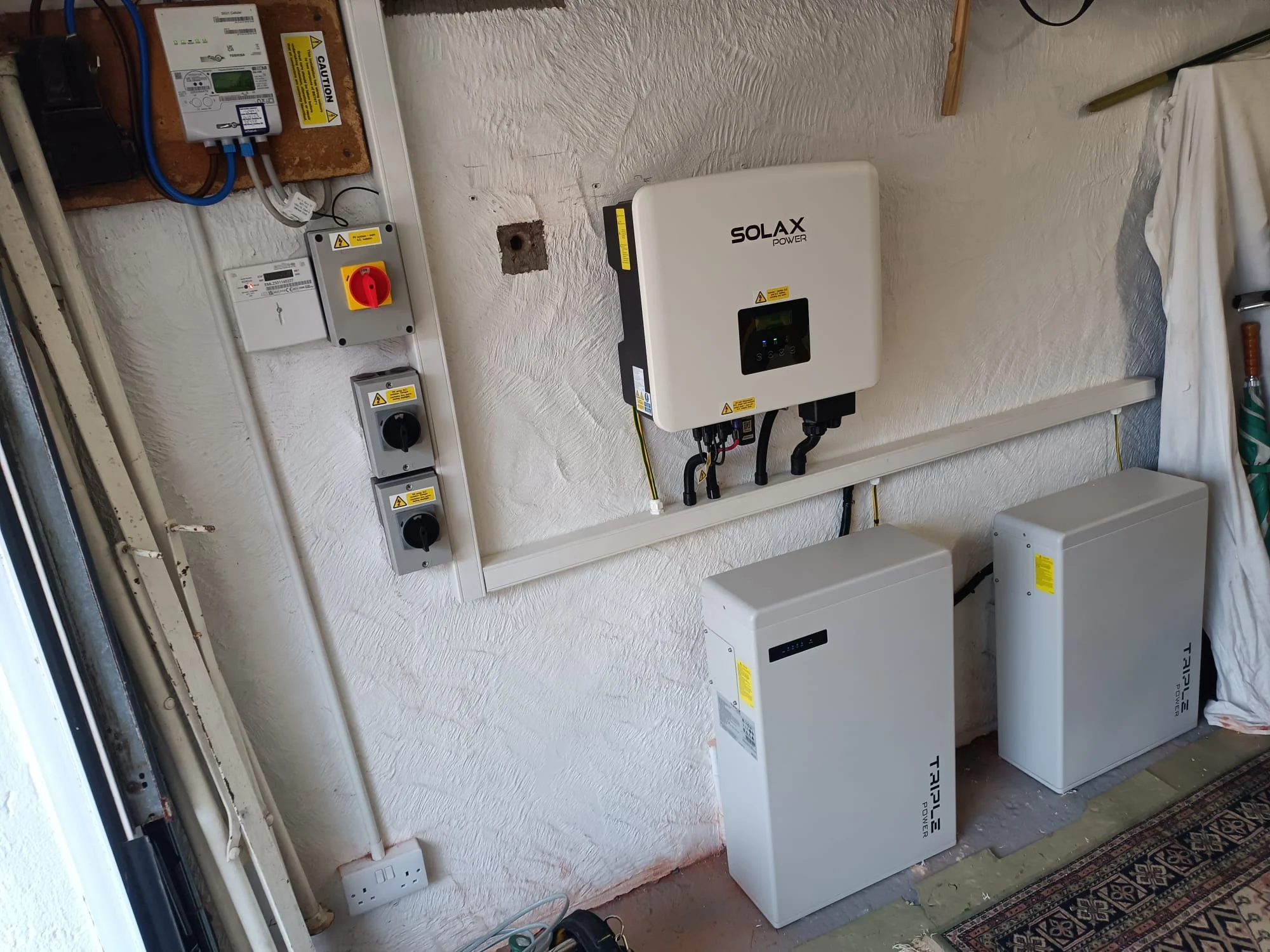
Solar panels in Carmarthen can help homeowners and businesses lower electricity bills, generate renewable energy and reduce their reliance on power purchased from the National Grid.
Solar photovoltaic panels convert daylight into usable electricity. They continue generating during cloudy conditions, although output will naturally be greater during brighter weather and longer summer days.
The performance of a solar panel installation in Carmarthen will depend on:
- Roof direction and pitch
- Available roof space
- Shading from trees and buildings
- Panel output and efficiency
- Inverter capacity
- Household or business electricity consumption
- Condition of the existing roof
- Overall quality of the solar PV design
An unshaded, south-facing roof will normally provide the highest annual generation. However, east- and west-facing roofs can also support effective solar panel systems.
East-facing solar panels produce more electricity during the morning, while west-facing panels generate more later in the day. This can benefit households that use more electricity before and after work.
A professional solar survey should assess the roof, shading, electrical installation and energy consumption before recommending a system.
How much do solar panels cost in Carmarthen?
The cost of solar panels in Carmarthen depends on the size of the proposed system, equipment specification and complexity of the installation.
The Energy Saving Trust currently uses an indicative cost of approximately £7,600 for an average 4.5kWp domestic solar panel system.
This is a national estimate and not a fixed quotation for every Carmarthen property.
Solar panel installation costs may be affected by:
- Number and output of the panels
- Panel and inverter specifications
- Roof height, pitch and condition
- Scaffolding and access requirements
- Shading and panel optimisers
- Electrical or consumer-unit upgrades
- Inverter and cable locations
- Solar battery capacity
- Monitoring equipment
- G98 or G99 network requirements
- Bird-protection systems
A complete solar panel quotation should include the system design, scaffolding, equipment, installation, electrical testing, commissioning, monitoring setup, MCS certification, warranties and customer handover documents.
A low headline price may not represent the best value if essential installation work, certification or aftercare has been excluded.
How much could solar panels save?
Solar panels can reduce electricity bills by allowing homeowners and businesses to use renewable electricity generated at their own property.
The strongest savings are generally achieved when electricity is consumed while the solar panels are generating.
Solar electricity can be used to operate:
- Washing machines
- Dishwashers
- Tumble dryers
- Home-office equipment
- Immersion heaters
- Heat pumps
- Electric vehicle chargers
- General household appliances
Homes occupied during the day may naturally consume a greater proportion of their solar generation. Other households can improve self-consumption by scheduling suitable appliances to operate during daylight hours.
Eligible solar panel owners may also receive payments for surplus electricity exported to the grid through the Smart Export Guarantee.
Actual solar panel savings will depend on:
- Annual electricity generation
- Household or business energy consumption
- Daytime electricity usage
- Import electricity prices
- Export tariff rates
- Solar battery performance
- Future changes in energy demand
A professional solar installer in Carmarthen should use recent electricity bills and a property-specific generation estimate when preparing a financial illustration.
What is the likely solar panel payback period?
The solar panel payback period is the estimated time required for accumulated electricity savings and export payments to recover the original installation cost.
Current Energy Saving Trust examples, based on July 2026 energy prices, indicate an estimated payback period of approximately nine to ten years for its Welsh example location.
Carmarthen properties may achieve different results because the payback period will be affected by:
- Total installation cost
- Solar PV system size
- Roof direction and shading
- Predicted annual generation
- Household electricity consumption
- Daytime solar usage
- Import and export tariffs
- Battery cost and performance
- Maintenance requirements
- Future electricity prices
Payback should therefore be calculated using the proposed system design and the customer’s actual electricity usage rather than relying on a generic national figure.
Is solar battery storage worthwhile?
Solar battery storage allows surplus electricity generated during the day to be stored and used later.
This can be useful for Carmarthen households where electricity consumption is highest during the evening, after solar generation has reduced.
A solar battery may help homeowners:
- Use more of their solar-generated electricity
- Reduce evening grid consumption
- Store surplus daytime generation
- Use compatible off-peak electricity tariffs
- Monitor household energy consumption
- Reduce reliance on imported electricity
Battery capacity should be matched to the property’s expected solar generation and electricity demand.
A battery that is too large may rarely reach full charge, while an undersized battery may not store enough electricity to meet evening requirements.
Because battery storage increases the initial installation cost, customers should receive separate financial illustrations for a solar-only system and a combined solar-and-battery installation.
Standard solar battery systems do not automatically provide electricity during a power cut. Backup power requires compatible equipment, additional electrical work and a purpose-designed backup arrangement.
Solar panels for Carmarthen businesses
Commercial solar panels can help businesses in Carmarthen reduce operating costs and generate more of their electricity on site.
Solar PV can be particularly effective for organisations that consume substantial electricity during daylight hours, including:
- Offices
- Workshops
- Warehouses
- Retail premises
- Manufacturing facilities
- Agricultural buildings
- Community centres
- Schools and leisure facilities
Before recommending a commercial solar system, the installer should assess operating hours, electricity consumption, roof structure, available space, three-phase electrical capacity, export restrictions and future energy requirements.
A commercial solar quotation should include estimated annual generation, anticipated on-site consumption, export assumptions, installation costs and an indicative payback period.
Planning permission and network requirements
Many conventional domestic rooftop solar installations qualify as permitted development and do not normally require a full planning application.
Additional permission or consent may be required for:
- Listed buildings
- Properties within conservation areas
- Flats and maisonettes
- Prominent installations
- Ground-mounted solar panels
- Installations affecting protected features
- Properties where permitted development rights are restricted
Leaseholders may also need permission from their landlord, freeholder or management company.
Property owners should check Carmarthenshire County Council’s planning guidance where there is any uncertainty.
The solar installer should also manage the appropriate electricity-network connection process.
A qualifying system operating at no more than 16 amps or 3.68kW per phase may fall under the G98 process. Systems exceeding this threshold or not meeting the relevant requirements will normally require a G99 application.
Customers should receive the appropriate network records, MCS certificate, electrical test documentation, system schematic, warranty information and operating instructions following installation.
Solar panel installation across Carmarthen
Big Green Solar designs and installs solar PV and battery-storage systems for homes and businesses throughout Carmarthen and surrounding areas, including:
- Carmarthen town centre
- Johnstown
- Llangunnor
- Abergwili
- Tanerdy
- Pensarn
- Bronwydd
- Nantycaws
- The wider Carmarthenshire area
Big Green Solar is a South Wales-based trading style of LMG Home Improvements Ltd.
Each recommendation begins with an assessment of the property, roof condition, shading, electricity consumption and future energy requirements. This allows the solar panel capacity, inverter, battery options and expected performance to be properly evaluated.
Request a solar panel quotation in Carmarthen
If you are considering solar panels or battery storage in Carmarthen, the Big Green Solar team can assess your property, electricity usage and future energy requirements before preparing a tailored quotation.
Visit Big Green Solar, complete the online quotation form or call 0333 210 0083 to arrange a solar panel survey in Carmarthen.
For cavity wall extraction, external wall insulation, rendering, roofing and other property-improvement services, visit LMG Home Improvements or call 0333 210 0083.
Solar panel costs, savings and payback estimates are indicative. Actual results depend on the property, system design, shading, electricity consumption, tariffs, maintenance requirements and future energy prices.