
Solar Panels in Ebbw Vale: Installation Costs, Savings and Battery Storage
October 10, 2026
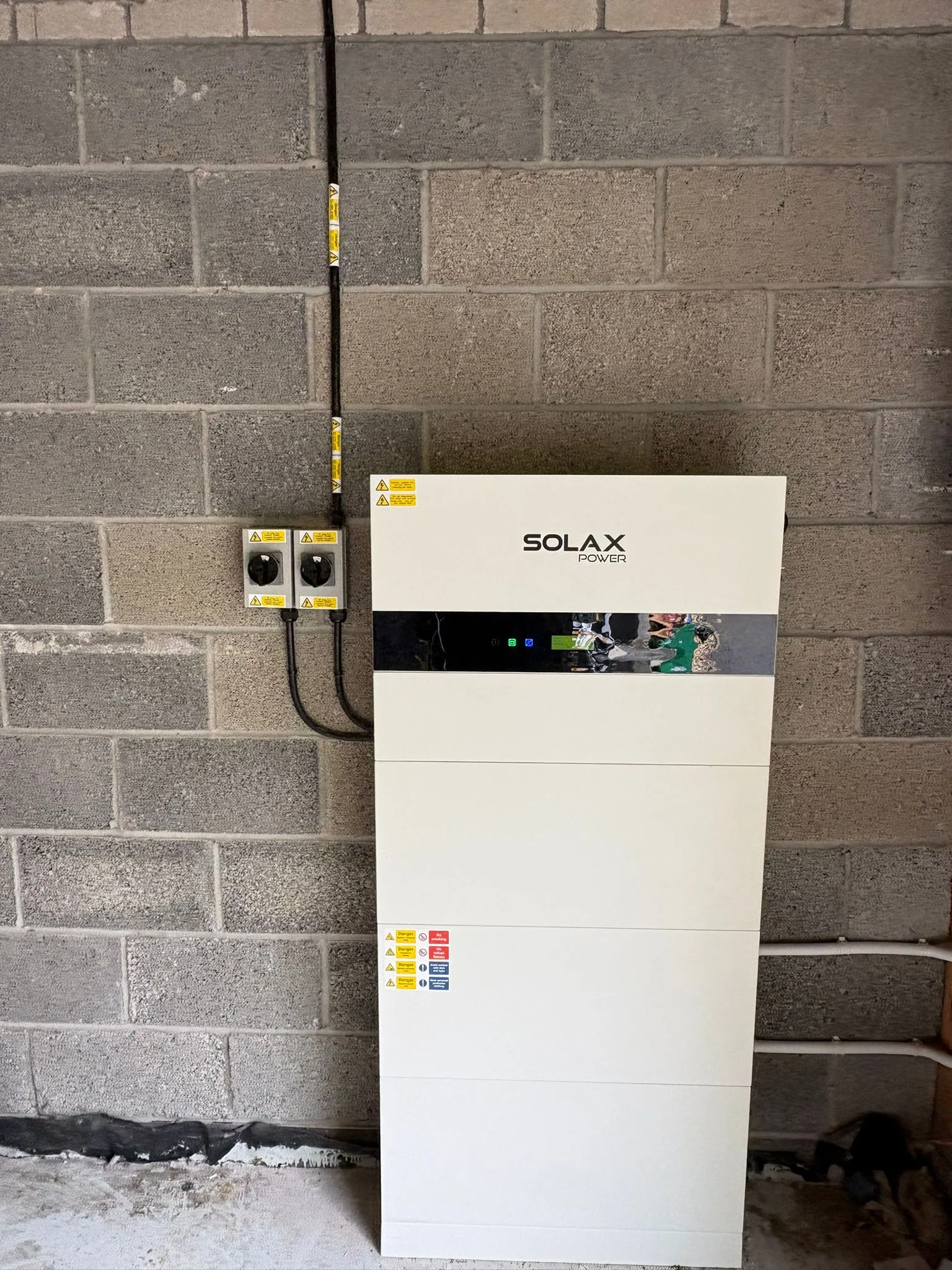
Solar panels in Ebbw Vale can help homeowners and businesses reduce electricity bills, generate renewable energy and become less reliant on electricity purchased from the National Grid.
Solar photovoltaic panels convert daylight into usable electricity. They continue generating during cloudy weather, although output will naturally be greater during brighter conditions and longer summer days.
The performance and financial return of a solar panel installation will depend on:
- Roof direction and pitch
- Available roof area
- Shading from hills, trees and buildings
- Panel output and efficiency
- Inverter capacity
- Condition of the existing roof
- Household or business electricity consumption
- Quality of the solar PV design
- Solar battery requirements
Ebbw Vale’s valley setting makes a detailed solar survey particularly important. Properties situated on different streets—or even opposite sides of the same street—may experience different levels of sunlight and seasonal shading.
Do solar panels work effectively in Ebbw Vale?
Solar panels generate electricity from daylight rather than heat, making them suitable for many properties in Ebbw Vale and the wider Blaenau Gwent area.
An unshaded, south-facing roof will normally produce the highest annual generation. However, east- and west-facing roofs can also support effective solar PV systems.
East-facing panels generate more electricity during the morning, while west-facing panels produce more later in the day. This can suit households that use more electricity before and after work.
Annual electricity generation will depend on:
- Roof orientation and angle
- Available installation space
- Seasonal and permanent shading
- Panel efficiency
- Inverter specification
- Local weather conditions
- Electrical system design
- Equipment condition and maintenance
A professional solar installer in Ebbw Vale should assess these factors before recommending the panel layout, inverter capacity, battery size or estimated annual generation.
Why valley shading assessments are important
Properties in and around Ebbw Vale can experience very different solar conditions because of the surrounding landscape.
Nearby hills may reduce the amount of low-angle sunlight reaching certain roofs during winter, early mornings and late afternoons. Additional shading may be caused by:
- Trees
- Chimneys
- Dormer windows
- Neighbouring properties
- Commercial buildings
- Roof-mounted equipment
Shading does not automatically make a property unsuitable for solar panels. The effect will depend on when the shading occurs, how much of the proposed array is affected and the overall system design.
Where partial shading cannot be avoided, the installer may consider:
- Alternative panel positions
- Dividing panels between different roof elevations
- Suitable inverter configurations
- Panel-level optimisers
- Microinverters
- A revised solar PV system size
Recommendations should be based on a detailed property assessment rather than a generic online estimate.
How much do solar panels cost in Ebbw Vale?
The cost of solar panels in Ebbw Vale depends on the system size, equipment specification and complexity of the installation.
The Energy Saving Trust currently uses an indicative cost of approximately £7,600 for an average 4.5kWp domestic solar panel system.
This is a national estimate and not a fixed price for every Ebbw Vale property.
Solar panel installation costs may be affected by:
- Number and output of the panels
- Panel make and specification
- Inverter type and capacity
- Roof height and pitch
- Slate, tiled or flat-roof construction
- Scaffolding and access requirements
- Roof repairs or structural work
- Shading and panel optimisers
- Consumer-unit condition
- Electrical upgrades
- Cable routes and inverter location
- Solar battery capacity
- Backup-power equipment
- Bird protection
- Monitoring equipment
- G98 or G99 network requirements
A straightforward domestic solar installation may cost less than the national estimate. A larger solar and battery system—or an installation requiring roofing, scaffolding or electrical upgrades—may cost considerably more.
The most reliable way to establish the cost of solar panels in Ebbw Vale is through a property survey and an assessment of the customer’s electricity bills.
What should a solar panel quotation include?
A solar panel quotation should cover the complete installation rather than relying on a low headline price.
Check that the proposal includes:
- Solar panels
- Inverter
- Roof-mounting equipment
- Scaffolding or access equipment
- Electrical installation
- Bespoke system design
- Panel layout
- Shading calculations
- Estimated annual generation
- G98 or G99 requirements
- Electrical testing and commissioning
- Monitoring setup
- MCS certification
- Product warranties
- Workmanship warranty
- Customer handover documents
- Aftercare arrangements
The quotation should clearly explain the assumptions used to calculate potential generation, electricity savings and payback.
A low initial price may not represent good value if essential installation work, suitable equipment, certification or aftercare has been excluded.
Is 0% VAT available for solar panels?
Qualifying residential installations of energy-saving materials are currently subject to 0% VAT until 31 March 2027, provided the installation meets the conditions in HMRC’s energy-saving materials guidance.
The installer is responsible for applying the correct VAT treatment.
Customers should not assume that every type of property, installation or associated building work will automatically qualify. The final quotation should clearly show the applicable VAT treatment.
How much could solar panels save?
Solar panels can reduce electricity bills by allowing property owners to use renewable electricity generated on their own roof.
The strongest savings are generally achieved when solar electricity is consumed while the panels are generating.
Homeowners can increase solar self-consumption by using suitable equipment during daylight hours, including:
- Washing machines
- Dishwashers
- Tumble dryers
- Immersion heaters
- Heat pumps
- Home-office equipment
- Electric vehicle chargers
Eligible solar panel owners may also receive payments for surplus electricity exported to the grid through the Smart Export Guarantee.
Actual savings will depend on:
- Annual solar electricity generation
- Household or business energy consumption
- Daytime electricity usage
- Import electricity prices
- Export tariff rates
- Solar battery performance
- Future changes in electricity demand
A professional quotation should use recent electricity bills and a property-specific generation estimate when calculating potential savings.
What is the likely solar panel payback period?
The solar panel payback period is the estimated time required for accumulated electricity savings and export payments to recover the original installation cost.
Current Energy Saving Trust calculations, based on July 2026 energy prices, indicate an estimated payback period of approximately nine to ten years for its Welsh example location of Aberystwyth.
The result for an individual Ebbw Vale property may be shorter or longer depending on:
- Total installation cost
- Solar PV system size
- Roof direction and shading
- Predicted annual generation
- Household electricity consumption
- Daytime solar usage
- Import and export tariffs
- Battery cost and performance
- Maintenance requirements
- Future electricity prices
Payback should be calculated using the proposed solar panel design and the customer’s actual electricity usage rather than relying on a generic national figure.
Is solar battery storage worthwhile?
Solar battery storage allows surplus electricity generated during the day to be stored and used later.
This can be particularly useful for households where electricity consumption is highest during the evening, after solar generation has reduced.
A solar battery may help homeowners:
- Use more of their solar-generated electricity
- Reduce evening grid consumption
- Store surplus daytime generation
- Use compatible off-peak electricity tariffs
- Monitor household electricity use
- Reduce reliance on imported electricity
Battery capacity should be matched to expected solar generation and electricity consumption.
An oversized battery may rarely reach full charge, while an undersized battery may not store enough electricity to support evening demand.
Because battery storage increases the initial project cost, customers should receive separate financial illustrations for a solar-only system and a combined solar-and-battery installation.
Standard battery systems do not automatically provide electricity during a power cut. Backup electricity requires compatible equipment, additional electrical work and a purpose-designed backup arrangement.
Planning and network requirements
Many conventional domestic rooftop solar panel installations qualify as permitted development and do not normally require a full planning application.
Additional permission or consent may be required for:
- Listed buildings
- Properties in conservation areas
- Flats and maisonettes
- Prominent installations
- Ground-mounted solar panels
- Installations affecting protected features
- Properties with restricted permitted development rights
Leaseholders may also require consent from their landlord, freeholder or management company.
The solar installer should also complete the appropriate electricity-network connection process.
A qualifying system operating at no more than 16 amps or 3.68kW per phase may fall under G98. Systems exceeding this threshold or not meeting the relevant requirements will normally require a G99 application.
The correct process depends primarily on the inverter output, phase arrangement, battery configuration and export capacity—not simply the combined wattage of the solar panels.
Customers should receive the appropriate network records, MCS certificate, electrical test documentation, system schematic, warranties and operating instructions following installation.
Solar panel installation across Ebbw Vale
Big Green Solar designs and installs solar PV and battery-storage systems for homes and businesses throughout Ebbw Vale and surrounding areas, including:
- Ebbw Vale town centre
- Beaufort
- Glyncoed
- Rassau
- Willowtown
- Waunlwyd
- Cwm
- Newtown
- Brynmawr
- Nantyglo
- Tredegar
- Abertillery
- The wider Blaenau Gwent area
Big Green Solar is a South Wales-based trading style of LMG Home Improvements Ltd.
Every recommendation begins with an assessment of the property, roof condition, valley shading, electricity consumption and future energy requirements. This allows the panel capacity, inverter, battery options and expected system performance to be properly evaluated.
Request a solar panel quotation in Ebbw Vale
If you are considering solar panels or battery storage in Ebbw Vale, the Big Green Solar team can assess your property, electricity usage and future energy requirements before preparing a tailored quotation.
Visit Big Green Solar, complete the online quotation form or call 0333 210 0083 to arrange a solar panel survey in Ebbw Vale.
For cavity wall extraction, external wall insulation, rendering, roofing and other property-improvement services, visit LMG Home Improvements or call 0333 210 0083.
Solar panel costs, savings and payback estimates are indicative. Actual results depend on the property, system design, valley shading, electricity consumption, tariffs, maintenance requirements and future energy prices.