
Solar Panels in Penarth: Installation Costs, Savings and Payback
October 7, 2026
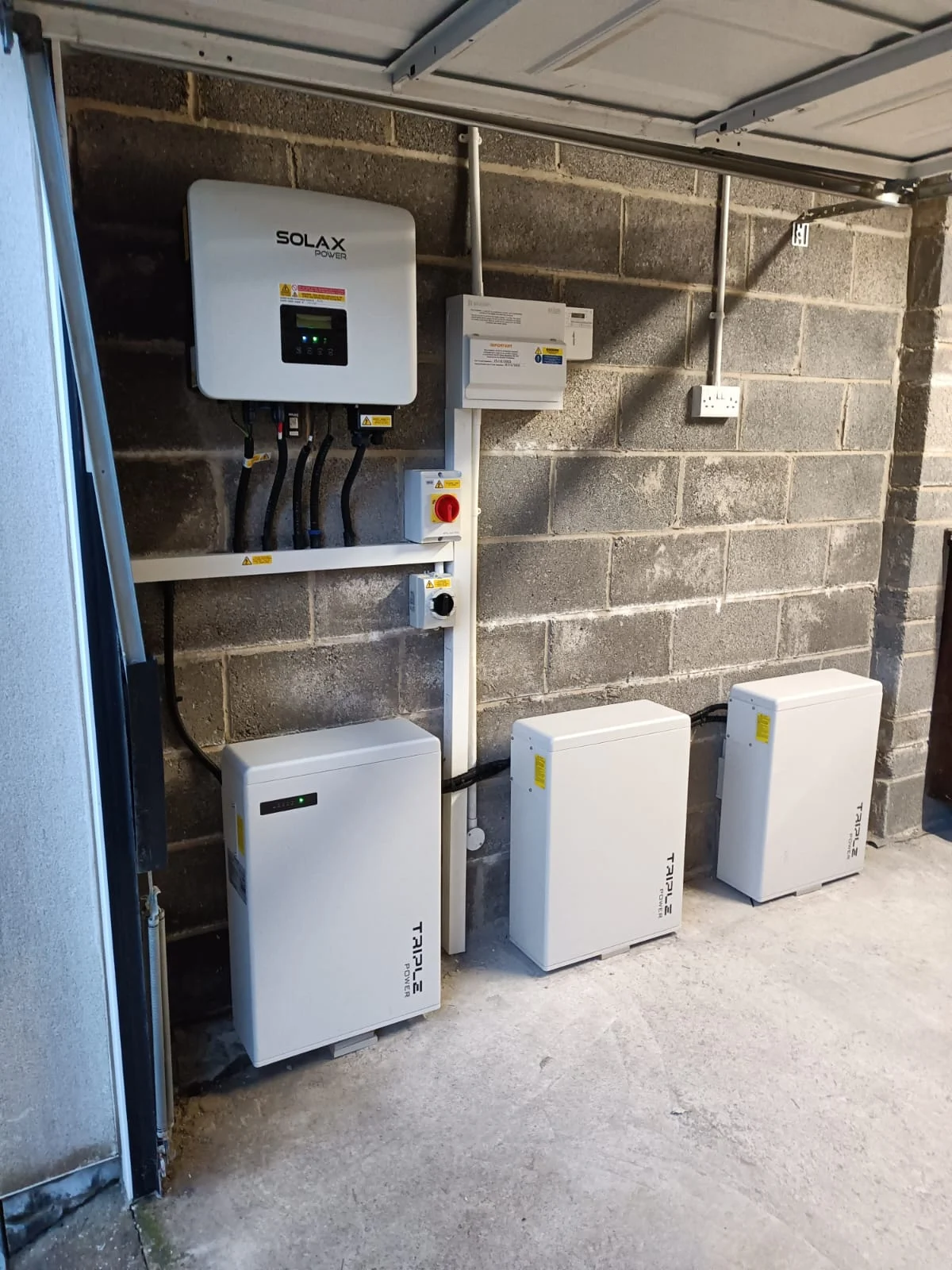
Solar panels in Penarth can help homeowners and businesses lower electricity bills, generate renewable energy and reduce the amount of electricity purchased from the National Grid.
Choosing the right solar PV system involves more than identifying an available section of roof. The property’s construction, roof orientation, shading, electricity consumption, equipment specification and battery requirements will all influence performance and financial return.
Penarth contains a varied mix of properties, including:
- Victorian and Edwardian houses
- Natural-slate roofs
- Modern housing developments
- Flats and maisonettes
- Listed and historic buildings
- Retail and commercial premises
- Community and leisure buildings
Every proposed solar panel installation in Penarth should therefore be assessed individually.
Do solar panels work effectively in Penarth?
Solar photovoltaic panels convert daylight into usable electricity. They do not require hot weather or uninterrupted sunshine, meaning they continue generating during cloudy conditions.
Output will be higher during bright summer days and lower during winter. However, a professionally designed solar PV system can produce useful renewable electricity throughout the year.
Annual performance will depend on:
- Roof direction and pitch
- Available roof space
- Shading from trees, chimneys and buildings
- Panel output and efficiency
- Inverter capacity
- Condition of the existing roof
- Local weather conditions
- Household or business electricity usage
- Overall system design
An unshaded, south-facing roof normally provides the highest annual generation. East- and west-facing roofs can also be suitable, although their total annual output is generally lower than an equivalent south-facing array.
East-facing panels produce more electricity during the morning, while west-facing panels generate more later in the day. This can suit households that use substantial electricity before and after work.
Solar panels in a coastal location
Penarth’s coastal position means the property survey should consider local wind exposure and environmental conditions.
The assessment should review:
- Roof condition and structural suitability
- Wind exposure
- Position of the proposed panel array
- Security of the mounting system
- Suitability of roof fixings
- External electrical equipment
- Scaffolding and safe access
- Future inspection and maintenance requirements
Solar panel mounting equipment and external components should be suitable for the property’s location and installed in accordance with the relevant manufacturer requirements.
This is particularly important for elevated or exposed properties close to the coast.
How much do solar panels cost in Penarth?
The cost of solar panels in Penarth depends on the proposed system, property type and complexity of the installation.
The Energy Saving Trust currently uses an indicative cost of approximately £7,600 for an average 4.5kWp domestic solar panel system.
This is a national estimate rather than a fixed price for every Penarth home.
Factors affecting solar panel installation costs include:
- Number and output of panels
- Panel and inverter specifications
- Roof height and pitch
- Slate, tile or flat-roof construction
- Scaffolding and access requirements
- Roof condition
- Structural or roofing work
- Shading and panel optimisers
- Consumer-unit condition
- Electrical upgrades
- Inverter location and cable routes
- Solar battery capacity
- Backup-power equipment
- Bird protection
- Monitoring equipment
- G98 or G99 network requirements
A smaller and straightforward solar installation may cost less than the national estimate. A larger system incorporating battery storage, specialist roof work or electrical upgrades may cost considerably more.
The most reliable way to establish solar panel costs in Penarth is through a property survey and an assessment of recent electricity bills.
Solar panels on older and slate-roofed properties
Many Penarth homes have natural-slate roofs or older roof structures that require additional care during a solar panel installation.
Before fitting panels, the installer should assess:
- Condition of the slates or tiles
- Roof underlay and battens
- Roof structure
- Signs of water ingress
- Existing repairs or deterioration
- Remaining life of the roof covering
- Appropriate mounting method
Necessary roofing repairs should ideally be completed before the solar panels are installed. This can avoid the additional cost and disruption of removing the panels to carry out roof work later.
The mounting system must be appropriate for the roof covering and installed without compromising weather resistance.
What should a solar panel quotation include?
A solar panel quotation should cover the complete installation rather than relying on a low headline price.
Check that the proposal includes:
- Solar panels
- Inverter
- Roof-mounting equipment
- Scaffolding or access equipment
- Electrical installation
- Bespoke system design
- Panel layout
- Shading calculations
- Estimated annual generation
- G98 or G99 requirements
- Testing and commissioning
- Monitoring setup
- MCS certification
- Product warranties
- Workmanship warranty
- Customer handover documents
- Aftercare arrangements
The quotation should identify which company will hold responsibility for the design, installation, electrical work, commissioning, certification, warranties and aftercare.
It should also clearly explain the assumptions used to calculate potential generation, savings and payback.
Is 0% VAT available for solar panels?
Qualifying residential installations of energy-saving materials are currently subject to 0% VAT until 31 March 2027, provided the work meets the conditions in HMRC’s energy-saving materials guidance.
The installer is responsible for applying the correct VAT treatment.
Customers should not assume that every property, installation or associated item of building work will automatically qualify. The quotation should clearly state the VAT treatment being applied.
How much could solar panels save?
Solar panels can reduce electricity bills by allowing property owners to use renewable electricity generated on their own roof.
The strongest savings are generally achieved when solar electricity is consumed while the panels are generating.
Homeowners can increase solar self-consumption by using suitable equipment during daylight hours, including:
- Washing machines
- Dishwashers
- Tumble dryers
- Immersion heaters
- Heat pumps
- Home-office equipment
- Electric vehicle chargers
Eligible solar panel owners may also receive payments for surplus electricity exported to the grid through the Smart Export Guarantee.
Actual savings will depend on:
- Annual solar electricity generation
- Household or business energy consumption
- Daytime electricity usage
- Import electricity prices
- Export tariff rates
- Battery performance
- Future changes in electricity demand
A professional solar quotation should use recent electricity bills and a property-specific generation estimate when calculating potential savings.
What is the likely solar panel payback period?
The solar panel payback period is the estimated time required for electricity savings and export payments to recover the original installation cost.
Current Energy Saving Trust calculations, based on July 2026 energy prices, indicate an estimated payback period of approximately nine to ten years for its Welsh example location of Aberystwyth.
Individual Penarth properties may achieve shorter or longer payback periods depending on:
- Total installation cost
- Solar PV system size
- Roof direction and shading
- Predicted annual generation
- Electricity consumption
- Daytime solar usage
- Import and export tariffs
- Battery cost and performance
- Maintenance requirements
- Future electricity prices
Payback should be calculated using the proposed system design and the customer’s actual electricity consumption rather than relying on a generic national figure.
Is solar battery storage worthwhile?
Solar battery storage allows surplus electricity generated during the day to be stored and used later.
This can benefit Penarth households where electricity consumption is highest during the evening after solar generation has reduced.
A solar battery may help homeowners:
- Use more of their solar-generated electricity
- Reduce evening grid consumption
- Store surplus daytime generation
- Use compatible off-peak electricity tariffs
- Monitor household energy consumption
- Reduce reliance on imported electricity
Battery capacity should be matched to expected generation and electricity demand.
Because battery storage increases the initial installation cost, customers should receive separate financial illustrations for a solar-only system and a combined solar-and-battery installation.
Standard batteries do not automatically provide electricity during a power cut. Backup electricity requires compatible equipment and a purpose-designed backup arrangement.
Planning and network requirements
Many conventional domestic rooftop solar panel installations qualify as permitted development and do not normally require a full planning application.
Additional permission or consent may be required for:
- Listed buildings
- Properties in conservation areas
- Flats and maisonettes
- Prominent installations
- Ground-mounted solar panels
- Installations affecting protected features
- Properties with restricted permitted development rights
Leaseholders may also require permission from their landlord, freeholder or management company.
Homeowners can review the current Welsh Government planning guidance for solar panels where there is any uncertainty.
The installer should also complete the appropriate electricity-network process.
A qualifying system operating at no more than 16 amps or 3.68kW per phase may fall under G98. Systems exceeding this threshold or not meeting the relevant requirements will normally require a G99 application.
Customers should receive the relevant network records, MCS certificate, electrical documentation, system schematic, warranties and operating instructions following installation.
Solar panel installation across Penarth
Big Green Solar designs and installs solar PV and battery-storage systems for homes and businesses throughout Penarth and surrounding areas, including:
- Penarth town centre
- Cogan
- Llandough
- Cosmeston
- Lavernock
- Sully
- Dinas Powys
- The wider Vale of Glamorgan area
Big Green Solar is a South Wales-based trading style of LMG Home Improvements Ltd.
Every recommendation begins with an assessment of the property, roof condition, coastal exposure, shading, electricity consumption and future energy requirements.
Request a solar panel quotation in Penarth
If you are considering solar panels or battery storage in Penarth, the Big Green Solar team can assess your property, electricity usage and future energy requirements before preparing a tailored quotation.
Visit Big Green Solar, complete the online quotation form or call 0333 210 0083 to arrange a solar panel survey in Penarth.
For cavity wall extraction, external wall insulation, rendering, roofing and other property-improvement services, visit LMG Home Improvements or call 0333 210 0083.
Solar panel costs, savings and payback estimates are indicative. Actual results depend on the property, system design, coastal exposure, shading, electricity consumption, tariffs, maintenance requirements and future energy prices.