
Solar Panels in Pontypool: Home and Business Guide
October 4, 2026
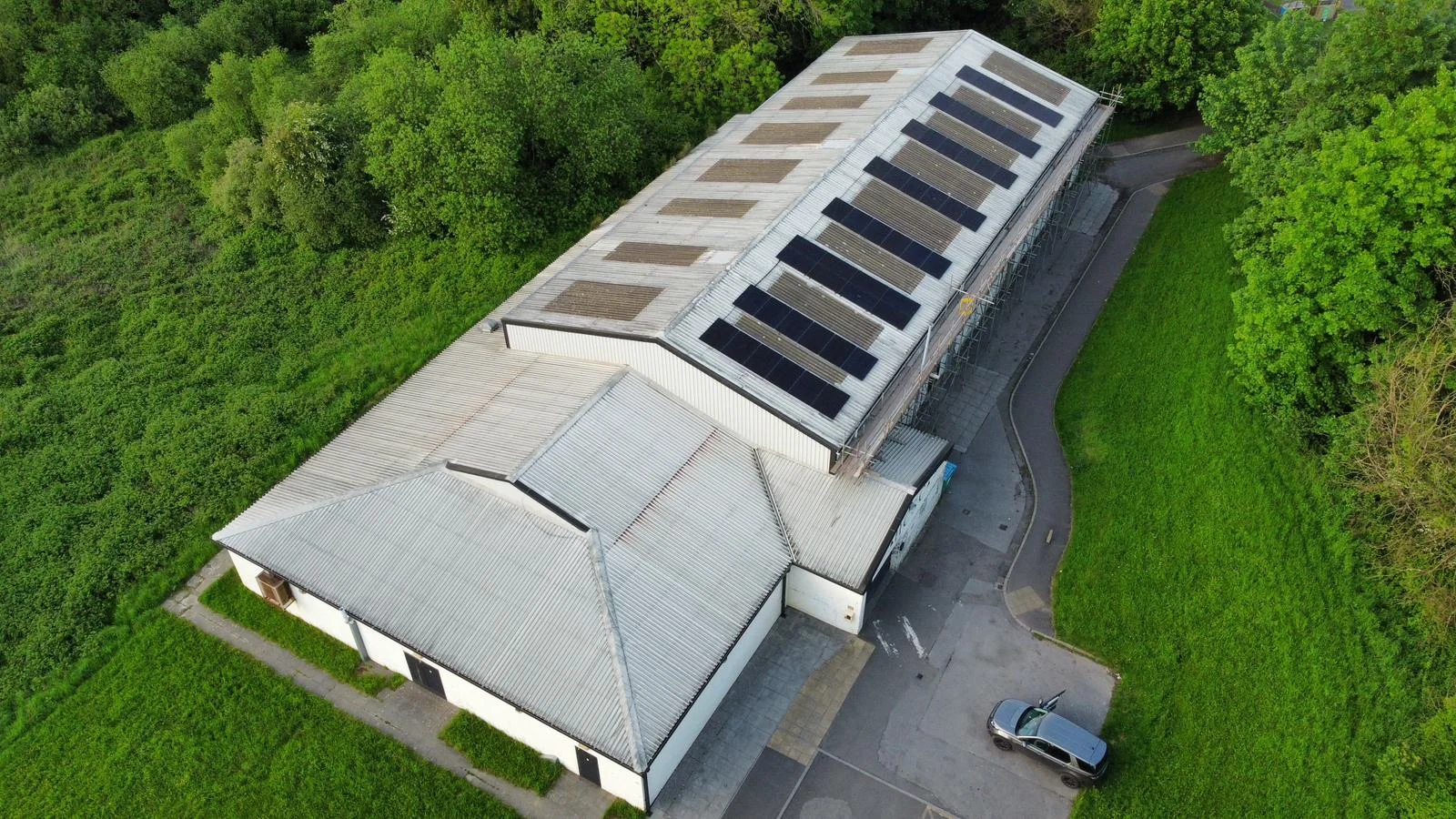
Solar panels in Pontypool can provide homeowners and businesses with a practical way to lower electricity costs, produce cleaner energy and reduce reliance on the National Grid.
The performance and financial benefits of a solar PV system are influenced by more than the quantity of panels fitted. Roof condition, orientation, shading, energy consumption, inverter capacity and battery storage should all form part of the system design.
This guide outlines the main benefits, considerations and installation requirements for homes and businesses considering solar panels in Pontypool.
How well do solar panels work in Pontypool?
Solar panels use daylight to produce electricity rather than relying on heat. They can therefore continue generating during cloudy conditions, although production is naturally higher on brighter days and throughout the summer.
The amount of electricity generated annually will depend on:
- Roof direction and pitch
- Usable roof area
- Shading caused by trees, hills, chimneys and buildings
- Panel efficiency
- Inverter capacity
- Quality of the system design
- Local weather conditions
- Condition of the equipment
A south-facing roof without significant shading will usually provide the strongest annual generation. However, east- and west-facing roofs can also deliver worthwhile results.
East-facing solar panels produce more power earlier in the day, while west-facing panels generate more during the afternoon and early evening. This may suit households where energy usage is greatest before and after normal working hours.
Shading must also be evaluated carefully. Regular partial shading across one section of a solar array may reduce generation. Before estimating performance, a professional survey should consider mature trees, nearby properties, chimneys and the surrounding landscape.
Can property owners receive solar export payments?
Eligible solar panel owners in Pontypool may apply for payments through the Smart Export Guarantee.
The Smart Export Guarantee allows qualifying small-scale generators to receive payments from participating electricity suppliers for power exported to the National Grid.
The rates and conditions offered differ between suppliers. When comparing export tariffs, property owners should consider:
- Rate paid for each kilowatt-hour
- Length of the contract
- Import electricity charges
- Smart-meter requirements
- Eligibility conditions
- Whether electricity exported from a battery qualifies
- Exit charges
- Any requirement to purchase electricity from the same supplier
Applicants may need an MCS certificate and evidence confirming that the relevant network connection procedure has been completed.
Could solar battery storage be worthwhile?
Solar battery storage captures surplus electricity produced during daylight hours so that it can be used later.
This may benefit households with higher evening demand after solar generation has reduced. Businesses may also use battery storage to support later operating hours, reduce peak demand or take advantage of suitable time-of-use electricity tariffs.
Potential advantages of solar battery storage include:
- Increasing the amount of solar electricity used on site
- Reducing electricity imported during the evening
- Retaining surplus daytime generation
- Charging during lower-cost tariff periods
- Monitoring electricity consumption
- Managing peak-time demand
- Reducing exposure to future electricity-price increases
Energy Saving Trust guidance indicates that solar battery installations commonly cost several thousand pounds. The final cost depends on the battery’s usable capacity, equipment specification and installation requirements.
Battery size should reflect the property’s solar generation and electricity demand. A battery that is too large may not charge fully, while a smaller unit may not store enough energy to cover evening consumption.
The installer should consider:
- Average daily electricity usage
- Forecast solar generation
- Electricity consumed during daylight hours
- Expected surplus generation
- Evening electricity demand
- Usable battery capacity
- Maximum charging and discharging rates
- Inverter compatibility
- Available electricity tariffs
Although battery storage can improve solar self-consumption, it also increases the initial project cost. Its effect on financial payback should therefore be calculated separately.
Can a solar battery provide power during an outage?
Not as standard.
Most solar PV systems connected to the grid shut down during a power cut. This safety measure protects engineers working on the electricity network.
A battery will only provide backup electricity when compatible equipment and a specifically designed backup arrangement have been installed.
Customers who require backup power should establish:
- Which electrical circuits will continue operating
- The maximum amount of power available
- Whether the panels can recharge the battery during the outage
- How long the stored electricity may last
- Whether the changeover happens automatically
Providing backup to selected essential circuits may require less equipment than supporting the whole property.
Commercial solar panels for Pontypool businesses
Commercial solar panels may be particularly beneficial for businesses that use significant amounts of electricity during daylight hours.
Suitable buildings can include:
- Offices
- Workshops
- Warehouses
- Retail units
- Manufacturing premises
- Community buildings
- Leisure centres
- Schools and sports clubs
Before designing a commercial solar PV system, the installer should review:
- Annual and half-hourly electricity consumption
- Normal operating hours
- Roof condition and structural capacity
- Available installation area
- Three-phase electrical capacity
- Network export restrictions
- Future plans for business growth
- Electric vehicle charging requirements
- Solar battery-storage options
A commercial solar proposal should set out the predicted annual generation, expected self-consumption, financial assumptions and estimated payback period.
Businesses should also confirm who owns the premises, whether permission is required from a landlord and how long they intend to remain in the building.
Do solar panels require planning permission?
Many standard rooftop solar installations may be classed as permitted development, which means that a full planning application is not normally necessary.
Planning permission or another form of consent may still be required when:
- The property is listed
- The building is located within a conservation area
- Panels are proposed for a prominent elevation
- The equipment would project excessively from the roof
- The panels would be installed on the ground
- The property is a flat or maisonette
- Permitted development rights have been withdrawn
- Protected architectural details may be affected
Planning permission for a commercial solar installation may also depend on the size, position and visual impact of the proposed system.
Anyone uncertain about the planning status of their project should review the latest Torfaen County Borough Council planning information. Listed properties and buildings in sensitive heritage locations may need a more detailed assessment.
Regardless of whether planning permission is required, the solar installation must still meet the applicable structural, electrical and Building Regulations requirements.
Request a solar panel quotation in Pontypool
If you are considering solar panels or battery storage in Pontypool, the Big Green Solar team can assess your property, electricity usage and future energy requirements before preparing a tailored quotation.
Visit Big Green Solar or call 0333 210 0083 to discuss a solar PV or battery-storage installation.
For insulation, rendering, roofing and other property-improvement services, visit LMG Home Improvements or call 0333 210 0083.